Malaysia’s constitutional monarchy faces a defining test as the courts decide whether the King’s explicit clemency directives — recorded in the Royal Addendum — were faithfully implemented or quietly diluted.
As Malaysia awaits the Federal Court’s decision on Datuk Seri Najib Razak’s judicial review, one issue stands above the political noise: the constitutional sanctity of the Royal Addendum issued by the 16th Yang di-Pertuan Agong. This matter is not about guilt, innocence, or relitigating past cases. It is about the foundational architecture of our constitutional monarchy — and whether an order by the King, made in His Majesty’s sole and exclusive domain, can be set aside, downgraded or ignored by administrative discretion.
At the heart of this judicial review is a simple question: Did the Pardons Board faithfully implement what the King had decreed? Far from challenging the court or asking it to evaluate royal intent, Najib’s application seeks clarification and enforcement of the King’s own words, documented and witnessed, including by a cabinet minister and legal officers present at the January 29 meeting. This alone makes his bid unprecedented — not in controversy, but in constitutional importance.
Royal Addendum: The King’s Powers Are Exclusive, Not Advisory
Under the Federal Constitution, clemency powers under Article 42 belong to the Yang di-Pertuan Agong. The Pardons Board assists, but the final decision is the King’s alone. Malaysian courts have consistently recognised that while the process may be reviewed for procedural fairness, the substance of royal discretion is not open to judicial reinterpretation.
This is why the Royal Addendum matters. If a monarch has expressly ordered that rehabilitation, extensions of imprisonment, or home detention be included as part of clemency, those directives must be executed faithfully. They are not optional, subject to editing, or contingent on political preferences of whichever administration is in office.
What Najib Seeks Is Not Extraordinary
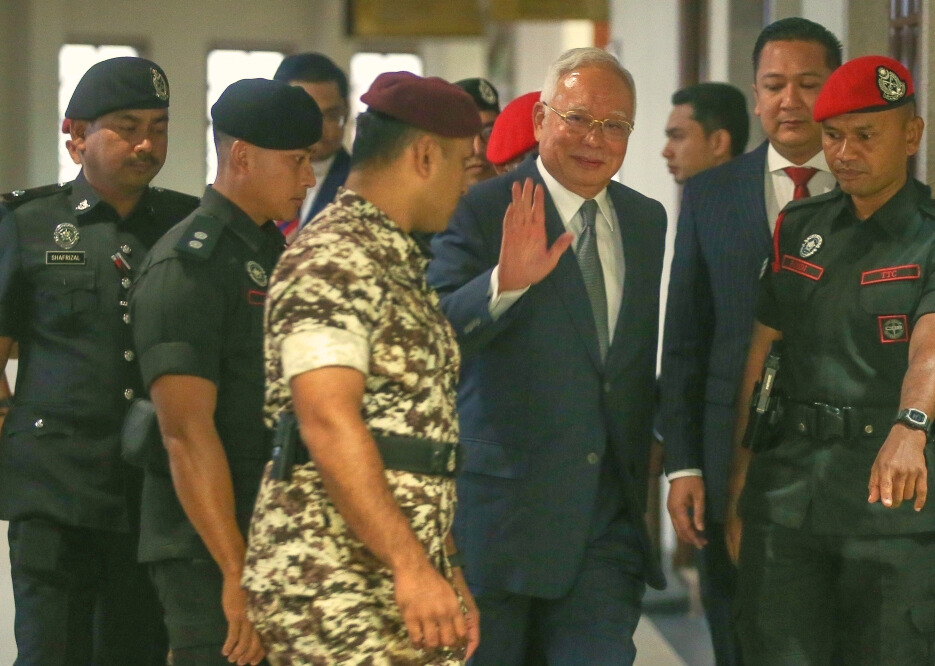
Opponents have attempted to frame this judicial review as an attempt to “override” or “pressure” the courts. This is inaccurate. Najib is not asking the judiciary to create new rights, overturn convictions, or substitute its own judgment for the executive’s. He only seeks confirmation that the King’s directive — constitutionally binding and superior to all ministerial decisions — was implemented as given.
In fact, ignoring a royal directive raises a far more serious concern: If the King’s clemency order can be diluted once, what prevents it from being diluted again? That is not a Najib issue. It is a constitutional issue that affects every Malaysian, every future monarch, and every future pardons application.
Political Noise Cannot Blur Constitutional Lines
Since February, various voices have tried to politicise the matter — suggesting conflicts, motives, or political calculations. But the stability of Malaysia’s system depends on one principle: The monarchy must remain above politics. The Royal Addendum is not a political concession. It is an exercise of constitutional authority.
Judicial review, therefore, becomes the proper mechanism to ensure the administrative arm — in this case, the Pardons Board secretariat and the government machinery involved — complied with that authority. Courts do not interfere with royal wisdom; they step in only when there is a question of whether the executive faithfully implemented it.
A Decision That Will Define More Than One Man’s Fate
Tomorrow’s decision will not just affect Najib Razak. It will set a defining precedent for how Malaysia understands and respects the powers of the Yang di-Pertuan Agong. If a King’s written directive — witnessed, recorded, and conveyed — can be ignored, Malaysia risks undermining the very balance that protects its democracy from excessive political control.
Whatever the court decides, one truth must remain clear: the King’s clemency power is not symbolic. It is sovereign, constitutional, and — above all — binding.
And no institution, political interest, or administrative body should stand above that. – NMH

Datin Hasnah is the co-founder and CEO of New Malaysia Herald based in Kuala Lumpur, Malaysia.
With an extensive background in mass communication and journalism, she works on building up New Malaysia Herald and it’s partner sites. A tireless and passionate evangalist, she champions autism studies and support groups.
Datin Hasnah is also the Editor in Chief of New Malaysia Herald.
Facebook Comments

Facebook Comments