Negeri Sembilan, based on Adat, risks first serious crisis of civilisation since Minangkabau arrival, if emergency declared!
Commentary And Analysis . . . The Negeri Sembilan Constitution, under the BFD (Basic Features Doctrine) which permeates the Federal Constitution, cannot be amended on the Four Undang. They, based on Adat as the first law in international law, exist.
Negeri Sembilan’s system exists because Orang Asli luak — autonomous river territories – – needed chiefs, Minangkabau migrants needed legitimacy, and four of those chiefs decided to hire a king in 1773.
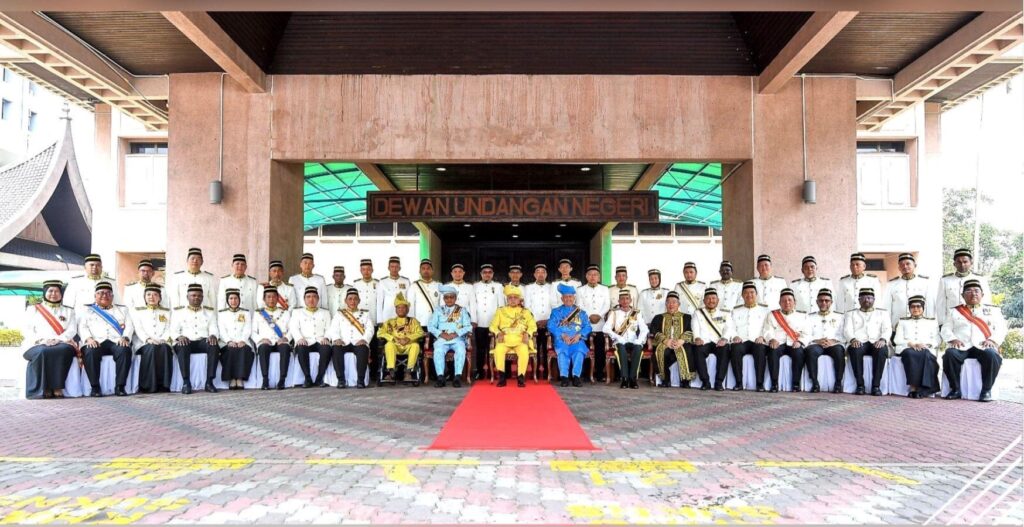
The Undang are older than the monarchy.
The monarchy is older than the state constitution.
Emergency
The Orang Asli are older than all of them.
In 2026, all three histories are colliding in one Dewan opening.
Negeri Sembilan …
That’s why the crisis involving the Negeri Sembilan Assembly looks unsolvable: the wiring has three eras in it. Orang Asli territorial adat from 1300, Minangkabau elective kingship from 1773, and British written constitution from 1957. They don’t always agree.
Why This Matters for the 2026 Crisis.
Undang . . .
When the four Undang claimed on 19 April 2026 that they could “depose” Tuanku Muhriz Tuanku Munawir they were invoking the oldest logic in the system: the Undang created the Yamtuan in 1773, so the Undang can uncreate him.
When Menteri Besar (MB) Datuk Seri Aminuddin Harun claimed Undang Mubarak was removed 17 April, he was invoking the modern constitutional logic: only DKU can remove an Undang, and the YDPA Besar chairs the DKU (Dewan Keadilan dan Undang).
Both are pulling on different strands of the same rope. The Minangkabau strand says Undang are kingmakers. The constitutional strand says DKU is supreme. The Orang Asli strand underneath says power comes from the luak, not from the palace or the MB’s office.
March Of History
How Negeri Sembilan’s System Originated — and Why It’s in “Orang Asli Country”.
Negeri Sembilan’s adat and constitutional system didn’t start with the Minangkabau. It started with the Orang Asli. The four Undang system is a Minangkabau overlay on a much older Orang Asli political order.
Based on historical research, here’s how it happened.
Before Minangkabau . . .
Before the Minangkabau: Orang Asli luak
From roughly 1000–1400 CE, the interior of what’s now Negeri Sembilan was settled by Temuan and Semelai Orang Asli. They didn’t have King. They had luak. Each luak was run by a Batin or Penghulu chosen by custom from senior families. Disputes were settled by muafakat (consensus) in a balai. Land was communal, matrilineal, and passed through women.
These luak covered the valleys of the Linggi, Muar, and Serting rivers. The names survive today: Sungei Ujong, Jelebu, Johol, Rembau. Those four were the largest and most organised Orang Asli luak. They already had chiefs, boundaries, and councils before any outsiders arrived.
After Minangkabau . . .
Minangkabau Migration: 1400s–1600s
Minangkabau from Sumatra began migrating across the Melaka Straits from the 15th century, especially after the fall of Melaka in 1511. They moved inland to escape Portuguese/Johor control and because the interior was good for paddy and tin.
They found Orang Asli already living in organised luak.
Instead of conquest, they did what Minangkabau do: merantau and assimilate.
Minangkabau also practiced matrilineal adat, Adat Perpatih, which matched Orang Asli custom. Marriage between Minangkabau men and Orang Asli women was common. Over two to three generations, the ruling families of the four luak became Minangkabau by culture and language, but their authority derived from the original Orang Asli territorial structure.
That’s why the titles “Undang” are not royal.
They’re territorial chiefs. “Undang” comes from undang-undang viz. the one who upholds the law of the luak. The chief’s power came from the suku in the valley, not from a sultan.
Why Negeri Sembilan Needed a Ruler: 1773 . . .
By the 1700s the four luak kept fighting each other and were being raided by Bugis and Johor. No luak chief could claim supremacy over the others because Adat Perpatih rejects central kingship. But they needed external legitimacy to deal with Johor, Selangor, and the Dutch.
So in 1773 the four Undang sent envoys to Pagaruyung in Minangkabau, Sumatra, and asked for a prince of royal blood to become their Yamtuan. Pagaruyung sent Raja Melewar. He landed at Penajis in Rembau.
The deal was explicit: the Undang elect the Yamtuan, and the Yamtuan rules only with their consent. He could not own land, tax at will, or appoint chiefs. He was a referee and foreign minister, not an absolute monarch. That contract became the basis of Negeri Sembilan’s constitution. It’s still there in 2026.
This is why Negeri Sembilan is the only state with an elective monarchy. The Undang predate the Ruler by 300+ years. The Ruler exists because the Undang created the job.
Orang Asli In The System . . .
After Raja Melewar, the Minangkabau aristocracy slowly marginalised the Orang Asli.
By British times, 1874–1895, the British recognised the four Undang as the “Malay chiefs” and ignored the Orang Asli Batin. The Orang Asli became anak buah — subjects — in their own ancestral luak.
But the structure still carries Orang Asli DNA:
Matrilineal adat: Both Temuan and Minangkabau pass clan and land through women.
That’s why Negeri Sembilan’s Adat Perpatih is matrilineal while the rest of Malaya is patrilineal Adat Temenggung.
Luak boundaries: Sungei Ujong, Jelebu, Johol, Rembau follow the old Orang Asli river territories. The names are pre-Minangkabau.
Election principle: Orang Asli Batin were chosen by mufakat of elders. The Undang are still elected by the Lembaga and Buapak of each luak, not appointed by the Ruler. That’s a direct survival.
No divine kingship: Orang Asli had no daulat.
Minangkabau Adat Perpatih also rejects daulat.
So Negeri Sembilan’s Yamtuan has no daulat — he’s “Yang di-Pertuan Besar,” the one made great by the people, not “Sultan,” the one with power from God.
British Reshaping: 1874–1957 . . .
The British cemented the Undang system because it suited Indirect Rule. The 1898 Jelebu succession dispute went to the British Resident. The 1948 Federation Agreement and 1957 NS Constitution wrote the four Undang + Tunku Besar Tampin + YDPA Besar into law as the Dewan Keadilan dan Undang (DKU).
The British also stripped the Orang Asli of political status.
Under the Aboriginal Peoples Act 1954, Batin became welfare officers, not chiefs.
The “Orang Asli country” in Negeri Sembilan has a Malay adat system built on top of it, with the Orang Asli politically underneath. — NMH
Longtime Borneo watcher Joe Fernandez has been writing for many years on both sides of the Southeast Asia Sea. He should not be mistaken for a namesake formerly with the Daily Express in Kota Kinabalu. JF keeps a Blog under FernzTheGreat on the nature of human relationships.
Facebook Comments

Facebook Comments