Anwar’s relationship with Mahathir cannot be restored, betrayal even if forgiven, was never forgotten based on lack of loyalty (Part 1).
Commentary And Analysis . . . Indeed, it has been alleged that Datuk Seri Anwar Ibrahim, after becoming Deputy President of Umno in 1993, Datuk Seri Ahmad Zahid Hamidi — then Umno Youth chief— for launching blistering attacks on Mahathir, whom he (Anwar) wanted removed. Mahathir, based on loyalty, had been Prime Minister since 1981.
The incumbent Deputy President, Tun Ghaffar Baba, withdrew, Mahathir having probably remained neutral. What followed was a matter of historical record [res gestae].
Sodomy I happened.
The government, based on Anwar’s own words during fiery briefing in 1998 before the media, was depicted as being composed of “spineless creatures.”
Loyalty
Apparently, based on loyalty not being shown, Mahathir advised the police that the report lodged by Anwar’s secretary against a political writer should no longer be kept in view or marked for no further action. The writer listed, in a book, 50 reasons why Anwar should not be Prime Minister.
Betrayal
Anwar’s betrayal could not be forgotten, and was probably never forgiven.
Again, Sodomy I happened.
There was also Sodomy II.
It has been alleged that Mahathir prevailed upon Prime Minister Datuk Seri Najib Tun Razak — read Sodomy 2 — for keeping Anwar out of the way. Najib was loyal.
House Arrest
Najib’s house arrest, decreed by the Agong on 29 January 2024, did not happen.
Najib was denied the house arrest. The responsibility lies with Anwar alone.
Of course, by his own admission, Najib did not declare the RM42m in political donation from SRC International, nor other political donation.
The court, taking the line of least resistance, jailed Najib on 23 August 2022, even though he was unrepresented.
Therein the matter stands.
Najib further faces the prospect of additional imprisonment—fifteen years, running concurrently, on 25 charges dubbed 1MDB —after completing jail for the SRC case.
Najib, having been denied remission on the halving of his sentence mentioned in the Pardons Board letter dated 29 January 2024, remains incarcerated.
There was light at the end of the tunnel when Najib obtained stay of execution on the RM1.8b claimed by SRC International.
Habeas Corpus
Habeas corpus arises as one form of remedy.
The Najib family could have filed habeas corpus application on the halving and the discharge and acquittal granted by Federal Court Review Panel Head, Judge Tan Sri Abdul Rahman, on the SRC case.
Neither step was taken.
Alternatively, Najib could have filed an application for judicial review on the remission after halving.
That too did not occur.
Instead, he filed judicial review on house arrest, which he recently withdrew, the matter having been rendered redundant when he was not released on 23 August 2024, based on remission.
There should be focus on securing fugitive Jho Low’s presence through extradition or mutual legal assistance, and on ensuring that any US clemency was conditioned on cooperation that remedies the procedural deficit, not merely on money returned.
All these place the issues in perspective for the commentary and analysis that follow.
Jurisprudential Replique
II. Jurisprudential Reply – Bar Council’s Challenge on the Zahid DNAA.
A. Introduction: Framing a Constitutional Controversy.
GRKumar’s “The Perilous Precipice” defends the Attorney General’s power under Article 145(3) of the Federal Constitution for discontinuing prosecutions [nolle prosequi].
It characterises the Malaysian Bar Council’s application for judicial review of the discharge not amounting to an acquittal, as an institutional encroachment, a trespass by professional body with alleged bias [parti pris] upon executive terrain.
We can test that thesis by doctrine alone [ratio decidendi].
We take no position on political wisdom or personal culpability.
The sole question was whether the article’s reasoning survives scrutiny under Malaysian public law [jus publicum].
It does not.
Category Errors
The thesis rests on category errors, misreadings of precedent, and an inversion of the burden of proof [onus probandi] in judicial review.
Most acutely, it asks that the court ignore the Attorney General’s motives while inviting the imputation of motives to the challenger, a contradiction in terms [contradictio in adjecto] fatal in any constitutional review.
B. The Nature of Article 145(3): Executive Power, Not Quasi‑Judicial Office.
The article begins by calling the Attorney General’s power a “quasi‑judicial authority” and a “cornerstone of the separation of powers.”
The labels misstate the law.
Character of the Power.
The Federal Court in Public Prosecutor v Dato’ Seri Anwar Ibrahim held that Article 145(3) confers an executive power, not a quasi‑judicial function.
The distinction was not merely academic.
A quasi‑judicial power implies duty on hearing the other side [audi alteram partem] and giving reasons [ratio decidendi].
Executive power, by contrast, was reviewable only for illegality, irrationality, or procedural impropriety.
The Wednesbury standard, adopted in Rama Chandran v Industrial Court and applied in prosecutorial discretion in Repco Holdings Bhd v Public Prosecutor, governs review.
The article’s mischaracterisation inflates the shield around the Attorney General and narrows the court’s supervisory role beyond what precedent permits.
Separation Of Powers
The article treats the separation of powers as a wall against review.
In truth, the separation was the very reason for judicial review.
As the Federal Court affirmed in Pengarah Tanah dan Galian, Wilayah Persekutuan v Sri Lempah Enterprise Sdn Bhd, the courts are the final arbiters of legality [ultima ratio legis].
When the Bar invokes the supervisory jurisdiction, it does not usurp executive power; it merely requests that the judiciary test whether that power was lawfully exercised.
The Bar initiates, the court decides.
This is the architecture of Article 121(1) of the Federal Constitution, not its breach.
Part 2 will treat Locus Standi, Motive, and the Burden of Proof [Onus Probandi] in greater depth. — NMH
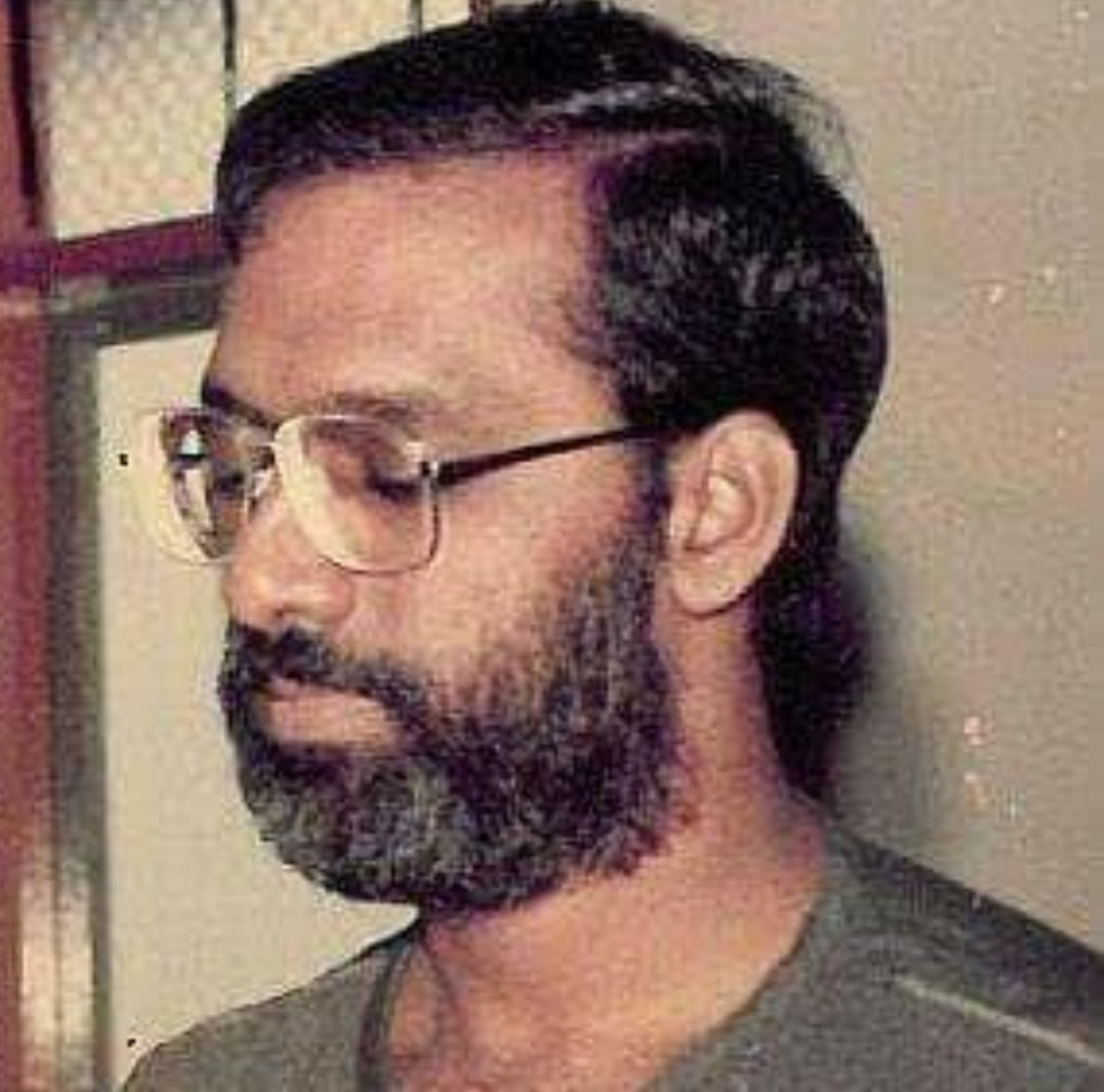
Longtime Borneo watcher Joe Fernandez has been writing for many years on both sides of the Southeast Asia Sea. He should not be mistaken for a namesake formerly with the Daily Express in Kota Kinabalu. JF keeps a Blog under FernzTheGreat on the nature of human relationships.
Facebook Comments

Facebook Comments