Lithium battery incidents on aircraft are no longer a fringe concern. As passenger numbers recover and personal electronic device usage climbs, the frequency of thermal runaway events involving powerbanks and smartphones in aircraft cabins has caught the attention of regulators, airlines and safety organisations worldwide.
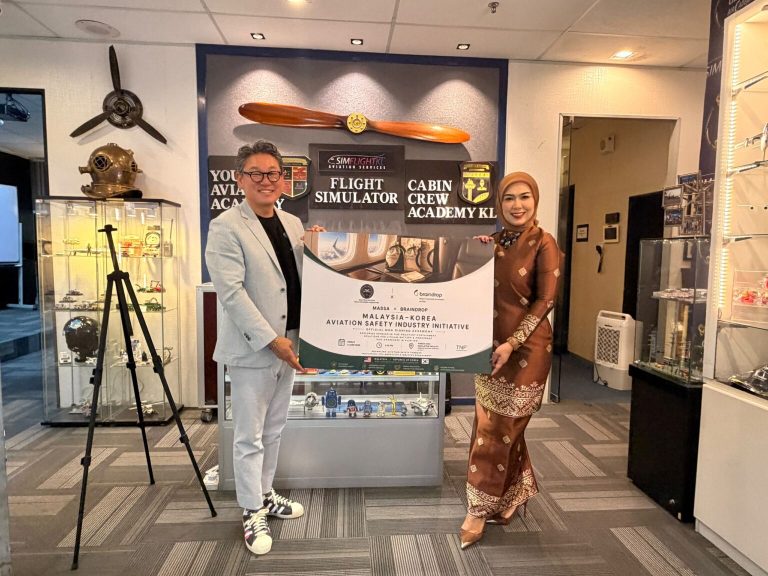
Malaysia Aviation Skills Standard Association (MASSA) is now taking a step toward addressing this through a new collaboration with South Korea-based technology firm Braindrop, one focused specifically on evaluating a flame-containment solution built for in-cabin battery emergencies.
The Risk Is Real
When a lithium-ion battery enters thermal runaway, the results can be severe. Temperatures can exceed 1,000°C, with the battery sustaining its own internal chemical reaction regardless of external intervention. Conventional fire extinguishers struggle to halt the process , they can suppress visible flames, but the reaction continues burning from within.
For cabin crew, that creates a serious problem. Time is limited. Evacuation may not be an option. And the fire is in close proximity to passengers, luggage and cabin materials.
What the TNF™ Air-Pouch Brings to the Table
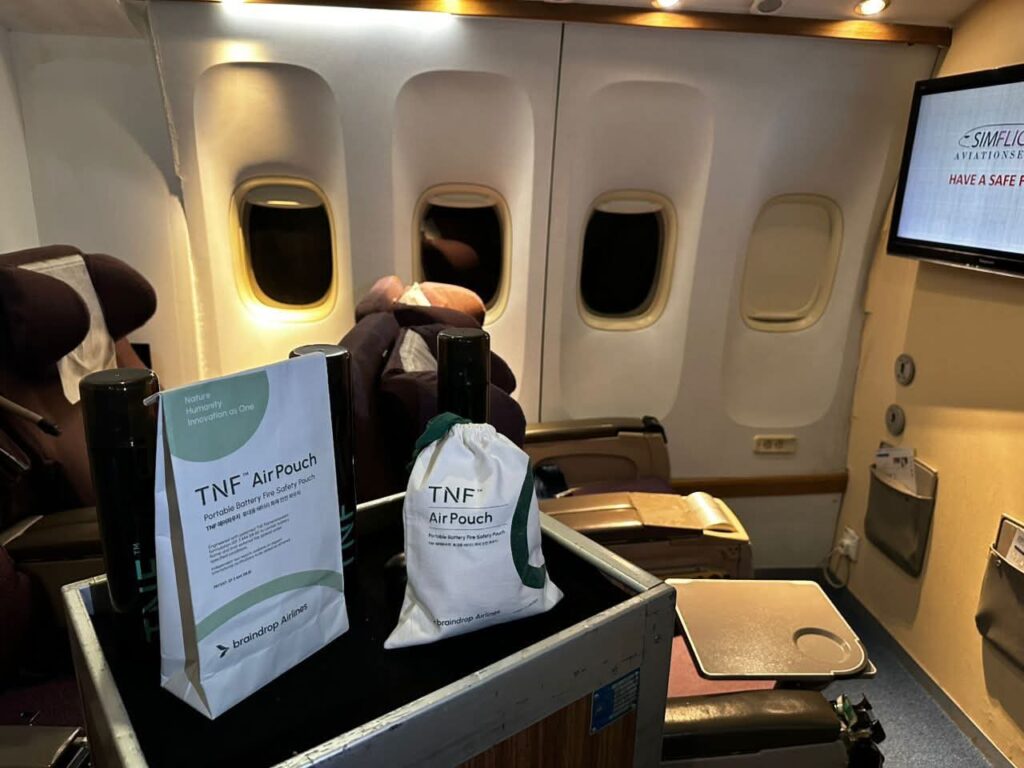
Developed by Braindrop, the TNF™ Air-Pouch takes a containment-first approach rather than attempting to extinguish the fire outright. The pouch uses the company’s patented TNF™ flame-retardant technology, a water-based, non-toxic coating engineered to withstand the extreme temperatures generated during thermal runaway.
The design allows gases to vent safely while preventing flames from spreading to surrounding cabin materials, giving crew members a critical window to assess and manage the incident. It is available in both disposable paper and reusable cotton fabric versions, keeping the solution practical for operational deployment.
Where This Collaboration Stands
Under the partnership, MASSA and Braindrop will conduct technical evaluations and engage aviation stakeholders across Malaysia including airlines, airports and regulatory bodies through product testing and safety demonstrations.
It is worth noting that this initiative remains at the evaluation and industry engagement stage. No regulatory approval, certification or endorsement has been granted. Any future implementation would require the appropriate assessment processes under Malaysian and international aviation frameworks, including guidance from ICAO and IATA.
A Broader Conversation
Malaysia is not alone in revisiting its approach to lithium battery safety. Across the region, aviation authorities have been tightening passenger directives and reviewing in-cabin procedures in response to a growing number of incidents.
Both organisations have indicated that should the evaluation progress, engagement could extend across the ASEAN aviation sector, a region that continues to see strong traffic growth and, with it, a rising volume of passenger-carried electronic devices.
The MASSA-Braindrop collaboration may still be in its early stages, but it reflects a wider industry recognition that thermal runaway is a problem that demands a dedicated, purpose-built response and not just a procedural patch.

Attiqah Mohd is a writer for New Malaysia Herald and a seasoned PR Specialist with six years of experience in public relations, branding, and media relations across various industries. Beyond her corporate expertise, she is a creative storyteller, painter, poet as well as passionate humanitarian and active volunteer with MERCY Malaysia.
Facebook Comments

Facebook Comments