Najib Razak’s legal team was deeply disappointed by the refusal to stay the 15-year 1MDB sentence imposed by Justice Datuk Collin Lawrence Sequerah, but Tan Sri Muhammad Shafee Abdullah says the defence will now take a fresh stay application to the Court of Appeal, where Najib’s substantive appeal is already pending — even as his separate house-arrest arrangement moves closer to reality.
KUALA LUMPUR: For former Prime Minister, Datuk Seri Najib Razak, Wednesday’s court decision was undoubtedly another painful setback.
But it was not the end.
After the High Court rejected his application to stay the execution of the 15-year sentence and RM11.4 billion fine in the 1MDB case, his lead counsel Tan Sri Muhammad Shafee Abdullah emerged from court visibly disappointed — describing the decision as one that had left the defence “very disappointed” and, indeed, “shocked”.
Yet beneath the disappointment was something else: determination.
Because for Najib and his legal team, the question now is not simply what happened in the High Court.
It is what happens next.
Shafee confirmed that the defence will file a fresh application for a stay of execution at the Court of Appeal after obtaining the full grounds of the High Court’s decision.
And that distinction matters.
Najib’s substantive appeal against the conviction and sentence imposed by Sequerah has already been filed at the Court of Appeal. He lodged his notice of appeal on 29 December 2025, shortly after being sentenced on 26 December. What the defence is now seeking is a stay of execution pending that appeal.
It Was A Stay, Not The End Of The Appeal
Najib was not asking the High Court to overturn the 1MDB conviction or the sentence imposed by Sequerah.
He was asking for the execution of that sentence to be stayed while the legal challenge continues.
That distinction matters.
A stay would not have erased the conviction or overturned the sentence. It would simply have paused its execution while Najib pursued his appeal.
The High Court, however, found that Najib had failed to satisfy the special-circumstances test required to justify a stay.
Justice Noor Ruwena Md Nurdin gave significant weight to the gravity of the offences and public-interest considerations, and also rejected the defence’s arguments based on Najib’s medical condition.
That was where the defence fundamentally disagreed with the court.
Shafee argued that public interest should be viewed differently when the issue before the court was whether execution should be stayed.
“Public interest is when you consider how to punish it, not when it is a question of stay,” he said.
That argument will now be taken to the Court of Appeal.
Why The Defence Is So Disappointed
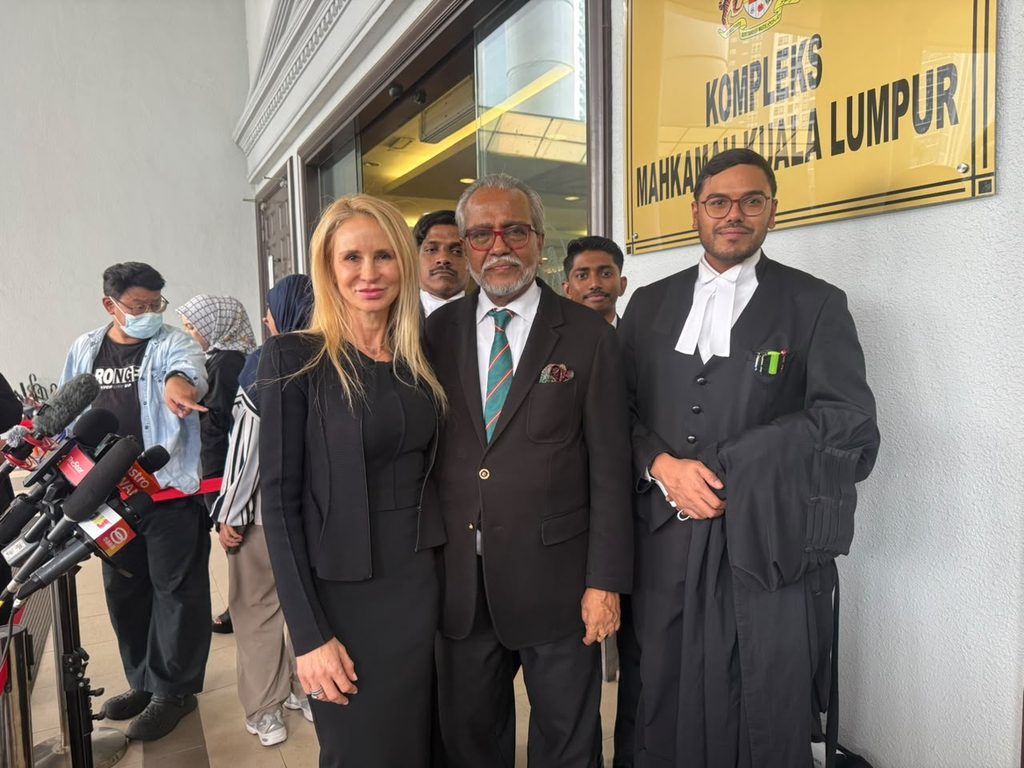
There was another point that clearly troubled Shafee.
He questioned the treatment of Najib as a repeat offender, pointing out that the prosecution itself had submitted that Najib was not a repeat offender.
Yet the judge did not accept that position.
Shafee argued that the offences in the SRC and 1MDB cases occurred during broadly the same period and questioned why Najib should be treated as a repeat offender in the circumstances.
For the defence, these are not minor technicalities.
They go to the reasoning behind the decision to refuse the stay.
And there is another important part of the story that may easily be overlooked.
The defence had deliberately chosen not to seek a stay immediately after Sequerah delivered the 1MDB judgment in December 2025.
According to Shafee’s submissions, Najib was then already serving his SRC sentence, and the defence wanted to preserve the possibility that the two sentences could run concurrently if the appellate court ultimately ruled in Najib’s favour on that issue.
The decision not to seek a stay at that time, Shafee argued, was expressly premised on Najib retaining the right to apply for a stay later, depending on subsequent developments.
The situation changed after the conditional pardon and the prospect of house arrest.
The 1MDB sentence, which is due to begin after Najib completes his existing SRC sentence, suddenly became much more immediate in practical terms.
That is why the defence is fighting for a stay now.
Stay First
Shafee was clear that the main appeal could take years.
And that, from the defence’s perspective, is precisely why a stay matters.
“We are going to the Court of Appeal to file a similar application,” he said.
The substantive appeal is already there.
The new battle is over whether the 1MDB sentence should be put on hold while that appeal is being heard.
For now, Shafee’s strategy can perhaps be summed up in two words:
“Stay first.”
And Then There Is Home
While one door has closed for Najib, another appears to be opening.
And this is perhaps the most human part of Wednesday’s developments.
Shafee confirmed that Najib has now received the official order relating to his house arrest, together with an attachment setting out its terms and conditions.
But the details cannot be disclosed.
According to Shafee, Najib has been instructed by the Prisons Department not to reveal the contents because the information is intended for his own use and disclosure could lead to public speculation.
One important detail, however, has been confirmed.
The house-arrest location is Najib’s own home at Langgak Duta, where he will be able to stay with his family.
The arrangement relates to the remainder of his existing SRC sentence, which was reduced to six years under the earlier pardon and is due to run until 23 August 2028.
The conditional pardon granted in September allows him to serve that remainder under house arrest, subject to the RM50 million payment condition.
But the High Court’s rejection of the 1MDB stay does not, in itself, cancel the separate house-arrest arrangement.
Shafee confirmed that the two matters remain distinct.
Two Legal Battles, Two Very Different Paths
This is where the story becomes more complicated than the headline of a rejected stay application might suggest.
There are now two separate legal tracks.
The first is the 1MDB case, where Najib has suffered a setback in his bid for a stay, but where his substantive appeal is already before the Court of Appeal and his lawyers will now file a fresh application seeking a stay.
The second is the SRC sentence and house-arrest arrangement, where the mechanism for Najib to serve the remainder of his reduced sentence at home has moved forward.
The two should not be conflated.
Indeed, the fact that Najib has received the house-arrest order and its accompanying documentation is significant in its own right.
For the first time, there is greater clarity about what the arrangement means in practical terms: when the conditions are fulfilled, the former prime minister will be able to serve the remainder of his SRC sentence at the home where his family lives.
And yet the future beyond 2028 remains tied to the 1MDB case.
As Shafee explained, if Najib ultimately does not obtain a stay of the 1MDB sentence, he could still face that sentence after the SRC term ends in 2028.
So Wednesday’s ruling did not simply produce a “yes” or “no” outcome for Najib’s future.
It produced another layer of uncertainty.
The Human Side Of The Legal Battle
For someone who has been behind bars since August 2022, the prospect of returning home is about more than legal technicalities.
It means waking up in his own home.
It means being with his family.
It means a very different kind of confinement from prison, even though it remains a form of detention with conditions attached.
And that prospect now exists alongside another battle — one that could determine what happens after 2028.
That is why the disappointment expressed by Shafee matters.
The stay application was, in practical terms, about buying time while the substantive appeal runs its course.
The High Court has said no.
The defence believes it should have said yes.
And now it will ask the Court of Appeal to decide whether the 1MDB sentence should remain on hold while that larger legal battle continues.
The Fight Moves On
For Najib, Wednesday was therefore neither a final victory nor the end of the road.
The immediate hope that the 1MDB sentence could be stayed by the High Court has been dashed.
But the substantive appeal remains alive.
And the defence is preparing another application — this time before the Court of Appeal — to seek the stay it failed to secure at the High Court.
At the same time, there is the prospect of home.
Langgak Duta.
His family.
And the possibility of serving the remainder of his SRC sentence under house arrest, once the conditions of the order are fulfilled.
For Najib, one door has closed.
But another legal door is already opening.
And somewhere in between those two doors is the prospect of home — and, beyond that, another legal battle still waiting to be fought.
For now, however, the message from his legal team is simple:
Stay first.
Then, the fight continues. – NMH

Datin Hasnah is the co-founder and CEO of New Malaysia Herald based in Kuala Lumpur, Malaysia.
With an extensive background in mass communication and journalism, she works on building up New Malaysia Herald and it’s partner sites. A tireless and passionate evangalist, she champions autism studies and support groups.
Datin Hasnah is also the Editor in Chief of New Malaysia Herald.
Facebook Comments

Facebook Comments