Remarks by Tony Pua may be constitutionally framed. But reducing the monarchy to its narrowest legal role risks misunderstanding the very Constitution he invokes.
NOT every tradition survives by accident. Some endure because they remain relevant, because they hold a society together when everything else pulls it apart, a point DAP’s Tony Pua seems to have missed.
In Malaysia, respect for the Yang di-Pertuan Agong and the Malay Rulers was once instinctive.
It formed part of our national rhythm — a quiet thread linking history, identity and continuity in a country of many races and faiths.
You did not have to agree with every decision. But you understood that the institution stood above the daily churn of politics.
The Latest Flashpoint: Tony Pua
That understanding is now fraying.
The latest flashpoint is Tony Pua and his Facebook post responding to Sultan Sharafuddin Idris Shah’s decree on the Rukun Negara controversy.
This week, Malaysians watched what happens when that thread is tugged too hard.
Pua’s post has drawn dozens of police reports nationwide and reignited debate over the limits of political speech.
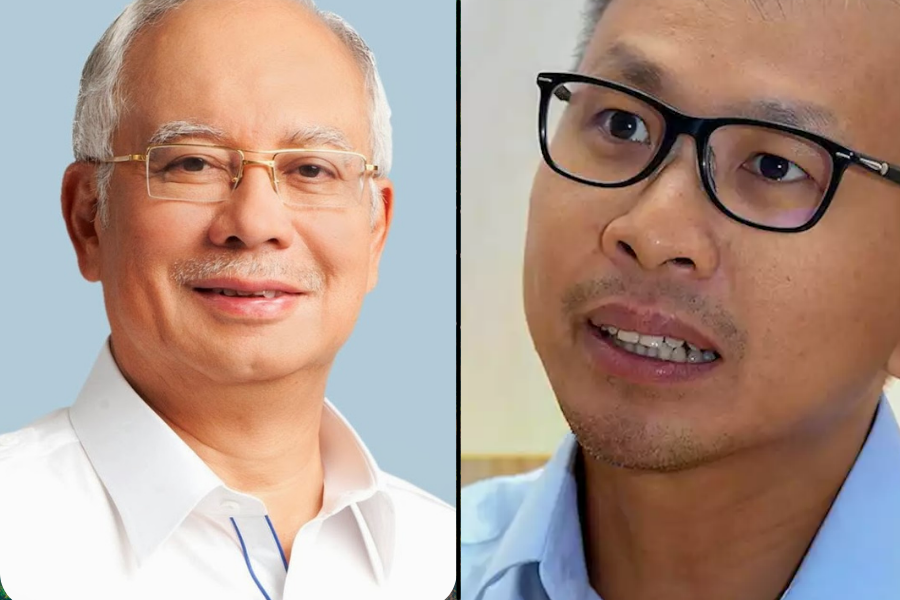
According to Bernama, Pua has since provided a statement to police over his Facebook post on Wednesday (21 May 2026).
“It was an investigation under Section 505 of the Penal Code and Section 233 of the Communications and Multimedia Act,” he was quoted as saying.
More than 80 police reports have reportedly been lodged, with the first made in Sri Muda, Shah Alam.
Constitutionally Framed, But Incomplete
Pua’s argument is straightforward.
Malaysia is a constitutional monarchy. Royal powers are defined and limited. Citizens, he says, should follow the Constitution and the Rukun Negara, not treat royal decrees as binding in all aspects of life.
Framed that way, it sounds like civic education.
But for many Malaysians, it landed differently.
Umno secretary-general Asyraf Wajdi described the remarks as “disrespectful towards the monarchy”, adding that mocking a Sultan’s decree crosses a line beyond free speech.
A PKR youth leader put it more bluntly: the monarchy is not merely symbolic, but a pillar of sovereignty and unity.
Both reactions point to something deeper.
The issue is not whether the Constitution limits royal power. It does.
The issue is whether the monarchy can be reduced to only those limits.
More Than a Legal Institution
The role of the Rulers has never been purely legal.
It is also symbolic, cultural and unifying — a shared reference point that sits above party lines, above ethnicity, above the next election cycle.
Meanwhile, legal scholar Prof Madya Dr Shahrul Mizan Ismail cautions against reducing the monarchy to what he describes as a “constitutional minimalism”, a reading that strips the institution down to its narrowest legal functions while ignoring its structural role within the Federation.
Writing in response to the same controversy, he argues that the Federal Constitution does not merely limit the monarchy, but embeds it as part of Malaysia’s governing framework: from executive authority to discretionary powers in moments of political uncertainty.
To frame the Rulers as purely ceremonial, he suggests, is not just incomplete but legally imprecise, overlooking the balance the Constitution deliberately strikes between elected authority and constitutional monarchy.
This is the point often missed in public debate.
The danger lies not in constitutionalism itself, but in reading the Constitution too narrowly.
Progress Without Continuity Has No Centre
For most Malaysians, the monarchy remains a symbol of unity above politics.
For some, its role feels outdated.
But progress without continuity becomes change without a centre.
Strip away that centre, and what follows is not clarity, but fragmentation.
This is not the first time Pua has ventured into this territory.
In 2024, the former Damansara MP was investigated under the Sedition Act over comments on the Pardons Board’s decision involving Najib Razak, with police saying the posts could incite public disdain towards the royal institution.
DAP distanced itself then, noting that the views did not reflect the party’s position.
Yet the pattern persists.
Respect Keeps Us Connected
Malaysia does not need less debate.
It needs debate that understands what it is debating.
Criticising policy is one thing. Reducing centuries-old institutions to inconvenient relics is another.
The Rukun Negara itself begins with “Kepercayaan kepada Tuhan” and includes “Kesetiaan kepada Raja dan Negara” for a reason.
These were not written lightly. They were meant to hold the country together, not to be selectively invoked.
Traditions like this must endure — not because they are frozen in time, but because they continue to serve a purpose.
Respect is not submission.
It is recognition of what keeps us connected when politics threatens to pull us apart.
Lose that, and Malaysia does not become more modern.
It becomes more divided.
Daulat Tuanku. – NMH
The writer is the Vice-president of Parti Cinta Malaysia and a commentator on governance and public policy. The views expressed are his own.
Facebook Comments

Facebook Comments