Network School has found itself at the centre of an explosive controversy over allegations involving Israeli nationals in Johor’s Forest City. But beyond the passports, politics and outrage lies a far bigger question: What exactly is the Network State vision behind the community — and what does its growing physical presence in Malaysia mean for the country’s regulatory, immigration and national interests?
FOREST CITY: It began with allegations that Israeli nationals may have participated in programmes run by Network School in Johor’s Forest City, possibly entering Malaysia using passports issued by other countries.
Within days, what might otherwise have remained a social media controversy escalated into an issue involving the Johor State Government, the Home Ministry, Immigration Department and local authorities — while attracting growing international attention.
Johor Menteri Besar Datuk Onn Hafiz Ghazi called for a comprehensive investigation. Immigration authorities subsequently inspected 266 foreign nationals and reported that those checked possessed valid travel documents, while further compliance checks continued.
Johor authorities, meanwhile, began examining matters within their own jurisdiction, with the Iskandar Puteri City Council taking enforcement action over licensing issues involving premises linked to Network School.
The distinction between jurisdictions is important. Immigration and the entry of foreign nationals are Federal matters, while business licensing and certain regulatory matters fall within State and local authority powers.
But the controversy has opened the door to a much broader discussion.
What exactly is Network School? What is the Network State philosophy associated with its founder, Balaji Srinivasan? And why did Forest City emerge as the physical home for this ambitious global technology community?

Network School And The Network State Vision
Srinivasan is an American technology entrepreneur and investor, former chief technology officer of cryptocurrency exchange Coinbase and author of The Network State: How To Start a New Country.
His concept goes considerably beyond building a technology hub, start-up accelerator or international co-living community.
Srinivasan’s Network State website describes an online community capable of collective action that eventually establishes a physical footprint across multiple locations and, at its most ambitious end, seeks diplomatic recognition from existing states.
None of this proves that Network School intends to separate Forest City from Malaysia, nor is there publicly established evidence that Malaysian sovereignty is under imminent threat.
But the philosophy raises legitimate questions.
What is the relationship between Network School as it exists today and Srinivasan’s wider Network State vision?
Is it simply an international technology community inspired by those ideas? Or is Network School intended, over the longer term, to become one of the physical building blocks envisaged by the Network State concept?
The distinction matters — and Malaysia is entitled to understand it.
Why Malaysia — And why Forest City?
Perhaps one of the most fundamental questions has received the least attention.
Why Malaysia?
Southeast Asia offers no shortage of potential locations for international technology entrepreneurs, cryptocurrency enthusiasts and digital nomads.
Indonesia’s Batam, for example, also sits close to Singapore and has long been developed as an industrial and investment hub.
Yet Network School chose Forest City.
There are perfectly rational reasons why.
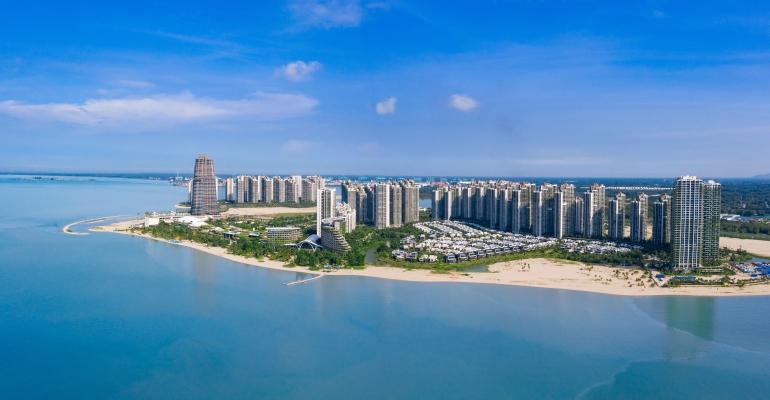
Forest City offers extensive ready-built infrastructure and accommodation. It sits close to Singapore, one of Asia’s leading financial and technology centres. Malaysia is comparatively affordable and has been actively seeking international technology investment and talent.
And, crucially, Forest City has space.
The development was conceived on an enormous scale but struggled for years with low occupancy.
What was once regarded as Forest City’s greatest weakness could therefore be one of its greatest attractions to a project seeking to assemble an international community in one physical location.
A movement interested in turning a digitally connected community into a geographically concentrated one does not necessarily need to build a city from scratch.
It can find a city with the infrastructure already in place.
Was Forest City selected primarily because of cost and proximity to Singapore? Did its evolving economic and financial incentives add to the attraction? Or did its unusual combination of infrastructure, low occupancy and room for expansion make it particularly suited to experimenting with the physical dimension of the Network State idea?
There is no evidence Network School seriously considered Batam and rejected it.
But the broader question remains:
What made Forest City the right place for Network School?
The Israeli Controversy — And An Important Distinction
It was the Israeli question that propelled Network School into Malaysia’s national consciousness.
Malaysia has no diplomatic relations with Israel and remains a staunch supporter of the Palestinian cause.
Allegations circulated that Israeli nationals had participated in the Network School community, including claims that individuals holding more than one nationality may have entered Malaysia using non-Israeli passports.
The initial Immigration Department inspection found that the 266 foreigners checked possessed valid travel documents.
But valid travel documents do not necessarily answer the questions that triggered the controversy.
The central issue is whether Israeli nationals were among those participating in the Network School community and, if so, whether they entered Malaysia using passports issued by other countries.
Given Malaysia’s longstanding policy towards Israel and the absence of diplomatic relations between the two countries, these are matters that warrant a thorough investigation.
The controversy also raises broader questions about the background and objectives of the individuals and networks involved in the Forest City community, particularly given the wider ideological ambitions associated with the Network State movement.
The issue, therefore, should not end with determining whether 266 individuals possessed valid passports.
It requires establishing who was present, under what nationality they entered Malaysia, the nature of their participation in Network School and whether all activities conducted in the country complied fully with Malaysian laws and policies.
These are questions that can only be answered through a comprehensive investigation by the relevant authorities.
Why was immigration already part of the conversation?
Another development deserves attention.
Months before the current controversy, Srinivasan had reportedly participated in closed-door discussions with Malaysian policymakers where he presented a redesigned prototype of Malaysia’s visa application platform and floated the possibility of fast-track visas for Network School participants.
There is nothing inherently improper about an international investor seeking improved visa arrangements for foreign talent. Countries routinely introduce specialised programmes to attract investors, entrepreneurs and skilled professionals.
But in the context of the Network State philosophy, immigration assumes particular significance.
A globally dispersed online community can only establish a meaningful physical community if its members can live together.
Who can enter? Who can stay? For how long? And under what immigration category?
These are legitimate policy questions, particularly when the founder’s own writings envisage a progression from online communities to physical territories and, eventually, political recognition.
From Israeli Nationals To A ‘Purge Of Jews’
The controversy has now travelled beyond Malaysia.
On 18 July, United States Congressman Greg Landsman issued a statement following reports concerning the possible deportation of Israeli nationals.
“They’re kicking Jews out of Malaysia,” Landsman declared, describing the situation as the beginning of a “purge of Jews”.
The language deserves scrutiny.
Malaysia’s controversy concerns Israeli nationals, immigration and the country’s longstanding position towards the State of Israel.
Within days, the issue had been reframed by an elected American politician as the persecution of Jews.
Landsman’s intervention demonstrates how rapidly a controversy originating with a private technology community in Johor can migrate into international politics.
It also presents Malaysia with another challenge: investigating legitimate concerns while ensuring its actions are not misrepresented internationally.
The RM500 Million Question
Then there is the money.
Following the investigation, Srinivasan put further planned investment in Malaysia — reportedly worth around RM500 million — on hold pending assurances, while seeking engagement with the Prime Minister’s Office.
He is entitled to defend his community and reconsider future investments.
Malaysia is equally entitled to enforce its laws.
Those two principles need not be mutually exclusive.
If Network School and its participants have complied fully with Malaysian law, investigations should establish that. If breaches occurred, they should be dealt with through due process.
The more important questions are what assurances Network School is seeking, what regulatory arrangements it requires to expand and how Malaysia can ensure any future arrangement remains consistent with the country’s immigration policies and national interests.
Johor Navigates A Complex Divide
For Johor, the stakes are considerable.
Forest City has spent years attempting to overcome its “ghost city” reputation and reposition itself as an economic and financial hub. An international technology community bringing entrepreneurs, investors and economic activity into an underoccupied development would understandably be viewed as an opportunity.
But the Network School controversy crosses multiple jurisdictions.
Immigration falls under Federal authority. Business licensing and certain local regulatory matters fall within State and local government powers. Technology investment and other activities may involve still more agencies.
Johor’s leadership has moved to address matters within its jurisdiction while calling for Federal authorities to investigate the immigration allegations.
The challenge now is not simply enforcement.
It is clarity.
As allegations, counter-allegations and political narratives spread rapidly across social media, authorities face the difficult task of separating verified facts from speculation while ensuring legitimate public concerns are addressed.
For Johor, that means protecting Malaysian laws and national interests while maintaining confidence in the State as a destination for legitimate international investment and technology talent.
Achieving both requires timely information, coordination between Federal, State and local authorities, and clear public communication.
The Questions Malaysia Must Now Answer
Reducing the Network School controversy to the nationality of 266 foreigners risks overlooking the larger issues now emerging.
A passport inspection can establish whether an individual possesses valid travel documents.
It cannot, by itself, answer questions about the purpose, governance, financing or long-term ambitions of an organisation operating within Malaysian territory.
Malaysia therefore needs clarity.
What is the precise legal and regulatory status of Network School?
What is its relationship with Srinivasan’s wider Network State vision?
Why was Forest City chosen?
What immigration arrangements are envisaged if its international community grows?
And what are Network School’s long-term plans for Malaysia?
These questions need not be interpreted as hostility towards Network School. They are questions any sovereign nation is entitled to ask.
For Johor, the immediate challenge is to navigate the conversation without compromising either national interests or investor confidence.
That requires more than enforcement. It requires knowing what Malaysians are being told, what they believe, where misinformation is spreading, which narratives are gaining traction and which legitimate questions remain unanswered.
Because in a controversy moving this quickly, an information vacuum can become as consequential as the facts themselves.
The real question is therefore not whether Malaysia should remain open to the world. It is how Malaysia remains open — with its laws respected, its sovereignty protected and its people fully informed. – NMH

Datin Hasnah is the co-founder and CEO of New Malaysia Herald based in Kuala Lumpur, Malaysia.
With an extensive background in mass communication and journalism, she works on building up New Malaysia Herald and it’s partner sites. A tireless and passionate evangalist, she champions autism studies and support groups.
Datin Hasnah is also the Editor in Chief of New Malaysia Herald.
Facebook Comments

Facebook Comments