As voters prepare to choose a new state government, Negeri Sembilan’s unprecedented royal dispute leaves a question the ballot box cannot answer. And if the BN-PN pact topples Pakatan Harapan just weeks after its Johor rout, the consequences could extend far beyond Seremban — perhaps even accelerating the road to GE16.
SEREMBAN — Come Saturday, 1 August, 889,490 voters in Negeri Sembilan will decide who governs the state for the next five years.
But this election is increasingly about something much bigger than Negeri Sembilan
Less than three weeks after Pakatan Harapan (PH) suffered a bruising defeat in Johor, the contest for Negeri Sembilan has become another test of Prime Minister Datuk Seri Anwar Ibrahim’s political coalition — and, perhaps more significantly, of the arrangement that has kept former rivals PH and Barisan Nasional (BN) together in Putrajaya since the hung Parliament of 2022.
The numbers alone make Saturday worth watching.
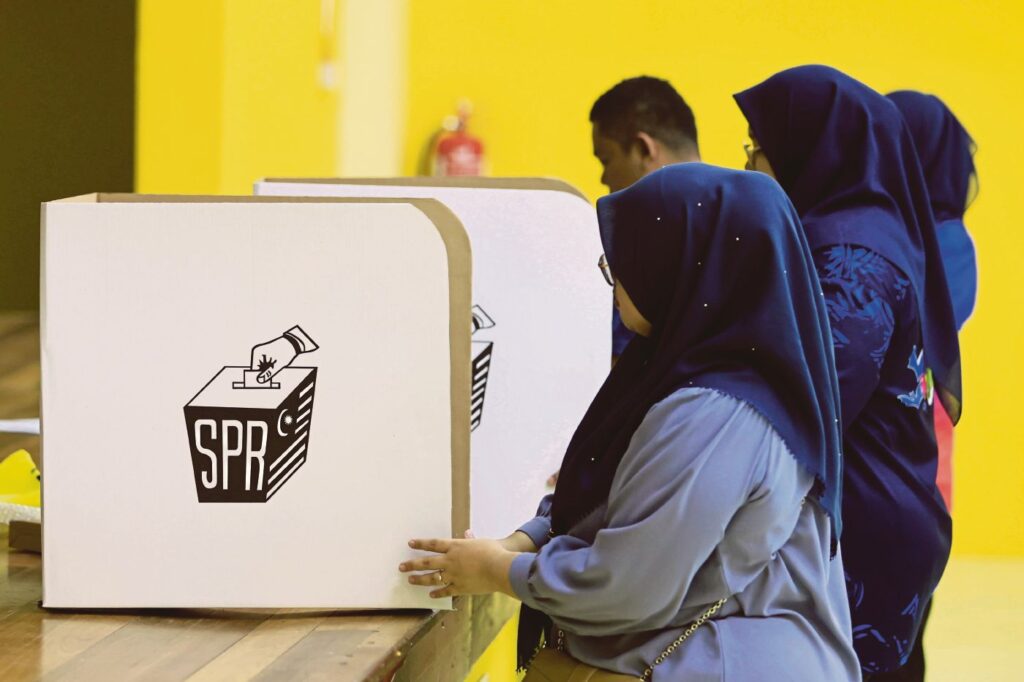
PH is contesting all 36 seats. BN is fielding candidates in 25, while Perikatan Nasional (PN) is contesting the remaining 11 under an electoral understanding designed to avoid clashes between the two.
Bersatu, following its rupture with its former allies, is fighting separately.
It is a dramatically different political landscape from 2023, when PH and BN went into the state election as partners and together won 31 of the 36 seats — PH taking 17 and BN 14.
Three years later, they are rivals in Negeri Sembilan even as their leaders continue sitting around the same Cabinet table in Putrajaya.
And BN has found another partner.
Negeri Sembilan Tests a New BN-PN Alliance
The significance of the BN-PN understanding goes beyond seat allocations.
For the first time since the formation of the Unity Government, Negeri Sembilan offers a real-world test of what happens when BN competes alongside PN rather than PH.
Former Bangi MP and political analyst Ong Kian Ming has argued that the arrangement makes a BN-PN state government highly likely, estimating that their combined Malay support could exceed 70 per cent if vote transfers work as expected.
Bersatu could complicate that equation by splitting votes in some constituencies, while turnout — particularly among non-Malay voters and those working in the Klang Valley — could prove decisive.
Nothing, therefore, is guaranteed.
But politically, the experiment matters even before the result is known.
For nearly four years, the central assumption behind the Unity Government has been that PH and BN, despite decades of rivalry, need each other to provide the parliamentary numbers and political breadth required to govern.
Negeri Sembilan poses an uncomfortable alternative.
What if BN has another option?
If BN and PN can avoid fighting each other, transfer votes effectively and form a government together, Saturday’s election may provide more than a new administration for Negeri Sembilan.
It could provide a template.
Johor Was the Warning
The timing could hardly be more consequential for PH.
On 11 July, BN swept Johor, winning 48 of the 56 state seats. PH was reduced from 12 seats to eight, while PN lost all three seats it previously held.
The result did not threaten Anwar’s parliamentary majority. State elections do not change the numbers in the Dewan Rakyat.
Politically, however, Johor demonstrated something important: BN could win overwhelmingly while fighting its federal partner.
BN chairman Datuk Seri Ahmad Zahid Hamidi celebrated the result by expressing hope that the victory would trigger a “blue wave” across other states.
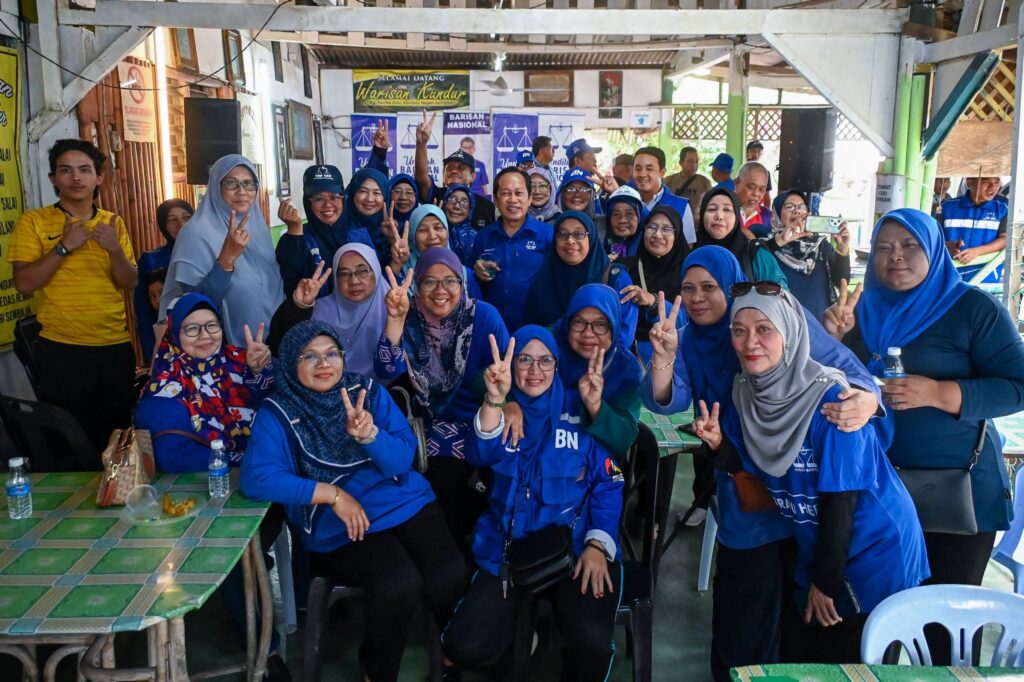
Three weeks later, that wave arrives at Negeri Sembilan’s doorstep.
But the equation here is different.
In Johor, BN showed it could beat PH.
In Negeri Sembilan, it may show it can replace PH — with PN beside it.
That distinction could prove far more important to Putrajaya.
Two Strikes for Anwar?
If PH retains Negeri Sembilan, Anwar will have an argument that Johor was exactly what BN said it was: a state-specific contest fought on BN’s strongest terrain.
If PH loses, that argument becomes harder to sustain.
Two major defeats within weeks — particularly if the second delivers power to an electoral combination involving BN and PN — would inevitably raise questions about the political direction of the country ahead of the 16th General Election.
The question would no longer simply be whether PH and BN can remain together in Putrajaya.
It would be whether they still want to.
For BN, a victory on Saturday could strengthen the argument that the coalition has recovered enough ground to negotiate the next phase of Malaysian politics from a position of greater strength.
For PN, cooperation with BN offers a possible route into government that does not depend on defeating UMNO for dominance of the Malay electorate.
And for PH, the danger is more fundamental.
If its federal partner can defeat it in one state and potentially form a government with its federal opponent in another, what exactly does the Unity Government represent once the country enters full election mode?
The arrangement created after GE15 delivered something Malaysia badly needed after years of political instability: a functioning government and a degree of continuity.
But political arrangements built from necessity are tested when that necessity begins to disappear.
Saturday may tell us whether that moment is approaching.
And Then There Is the Palace
Yet even if voters deliver a clear majority, Negeri Sembilan faces another question altogether.
Who appoints and swears in the next Menteri Besar?
The state enters polling day amid an unprecedented royal dispute following the April declaration by the Undang Yang Empat that Tuanku Muhriz Tuanku Munawir had been removed as Yang di-Pertuan Besar and that Tunku Nadzaruddin Tuanku Ja’afar had been chosen in his place.
Tuanku Muhriz, however, has continued to perform royal functions. It was with his consent that the State Legislative Assembly was dissolved on 5 June, paving the way for Saturday’s election.
The dispute is rooted in Negeri Sembilan’s unique constitutional monarchy and Adat Perpatih, under which the Yang di-Pertuan Besar is elected by the four Undang rather than inheriting the throne through straightforward primogeniture.
But what began as a royal and constitutional confrontation has already crossed into electoral politics.
UMNO’s 14 assemblymen withdrew their support for then-Menteri Besar Datuk Seri Aminuddin Harun amid the fallout from the royal confrontation, setting in motion the political crisis that eventually led to the early dissolution of an assembly whose term was not due to expire until 2028.
Now the election may settle the political numbers without settling the constitutional dispute.
The Negeri Sembilan Constitution provides for the appointment of a Menteri Besar who commands the confidence of the majority in the State Legislative Assembly.
Under ordinary circumstances, what follows polling day is clear.
The results establish a majority. A leader emerges. The ruler appoints the Menteri Besar, who takes the oath of office.
Not Ordinary
But these are anything but ordinary circumstances.
If PH wins a majority, who formally appoints Aminuddin — assuming he remains its choice for Menteri Besar?
If BN-PN wins, before whom does its nominee present himself?
And what happens if competing claims to the throne produce competing assertions of constitutional authority?
These are questions the ballot box cannot answer.
Saturday may determine who has the democratic mandate to govern Negeri Sembilan.
It may not determine how that mandate is constitutionally translated into government.
Melaka Is Already Waiting
Whatever happens in Negeri Sembilan, the political calendar does not stop on 1 August.
Melaka is next in the conversation.
PH confirmed earlier this month that it was withdrawing from the BN-led Melaka state administration following disagreement over constitutional amendments allowing the appointment of nominated assemblymen.
Its five assemblymen withdrew from the state government, while PH representatives in local councils and village committees were instructed to vacate their posts effective 31 July — one day before Negeri Sembilan votes.
The symbolism is difficult to miss.
At federal level, PH and BN govern together.
In Johor, they fought each other.
In Negeri Sembilan, BN is cooperating electorally with PN against PH.
In Melaka, PH has walked out of a BN-led state administration.
The Unity Government remains intact in Putrajaya, but outside Putrajaya its component parties increasingly look like competitors preparing for an election.
That raises a question Anwar may soon have to confront.
Why wait?
Is GE16 Moving Closer?
The next general election is not required until 2028, but speculation over an earlier contest has been building for months.
Anwar himself said in May that an early election could be considered if tensions within the governing alliance continued to widen.
Johor has since delivered BN a landslide.
Negeri Sembilan could hand BN-PN another victory.
Melaka is moving towards its own state election, while Sarawak must also return to the polls.
Individually, none of these developments requires GE16 to be called.
Together, however, they could change the calculation.
A government considering an early election has to ask two questions: whether waiting improves its prospects, and whether events are beginning to move beyond its control.
For PH, a victory in Negeri Sembilan could halt the narrative created by Johor and allow Anwar to argue that the coalition remains competitive beyond its urban strongholds.
A defeat would do the opposite.
It could embolden BN, encourage further cooperation between BN and PN, deepen questions within PH about the value of its federal arrangement, and turn the coming Melaka and Sarawak elections into further tests of Anwar’s national standing.
It could also revive discussion over whether some of those contests should be brought into a broader election window, potentially alongside GE16.
Synchronising elections is not simply a matter of political convenience. Different state assemblies operate according to their own constitutional timelines, and dissolution ultimately involves their respective heads of state.
Sarawak, too, operates within its own distinct political ecosystem, and there is no certainty that its leadership would see advantage in aligning its election with contests in the peninsula.
But politically, the question is becoming increasingly difficult to ignore.
Malaysia has spent much of 2026 moving from one political contest to another.
At some point, the temptation may be to settle the larger question.
Beyond Negeri Sembilan
That is why Saturday matters.
Negeri Sembilan’s 889,490 voters are not voting on Anwar Ibrahim’s premiership. They are choosing 36 state assemblymen.
Nor would a BN-PN victory automatically bring down the Federal Government.
Anwar’s government stands or falls according to confidence in the Dewan Rakyat, not the outcome of a state election.
But elections create political momentum long before they alter parliamentary arithmetic.
Johor demonstrated BN’s strength.
Negeri Sembilan could test whether that strength can be combined with PN’s support base to create an alternative political arrangement.
Melaka may then test whether PH and BN can continue their federal partnership while increasingly competing against each other at state level.
And somewhere beyond all three lies GE16.
On Saturday night, Malaysians may know who has won Negeri Sembilan.
They may even have a clearer idea of where Malaysian politics is heading next.
But the state itself could wake up on Sunday to an extraordinary constitutional question that the election has not resolved: who has the authority to appoint and swear in the next Menteri Besar?
While Negeri Sembilan must still decide who has the constitutional authority to appoint the government its voters have chosen, the irony is hard to miss: the country’s second-smallest state may yet have a very big say in what happens next in Putrajaya. – NMH

Datin Hasnah is the co-founder and CEO of New Malaysia Herald based in Kuala Lumpur, Malaysia.
With an extensive background in mass communication and journalism, she works on building up New Malaysia Herald and it’s partner sites. A tireless and passionate evangalist, she champions autism studies and support groups.
Datin Hasnah is also the Editor in Chief of New Malaysia Herald.
Facebook Comments

Facebook Comments