In Part 1, we examined why the 2016 South China Sea arbitral award continues to raise legitimate legal questions. In Part 2, we shift the focus to a more fundamental issue: how Malaysia should advance its own interests in the South China Sea. From the historical legacy of the “Malayan Sea” to recent developments at Pulau Layang-Layang, Lawyer Nor Hisham Mohd Nor argues that Malaysia must articulate a distinctly Malaysian narrative rooted in sovereignty, history and national interest.
In Part 1 of this series, we argued that Malaysians should revisit the legal questions surrounding the 2016 South China Sea arbitral award through the lens of Malaysia’s own national interests.
Barely weeks later, regional developments have reinforced why that discussion matters.
Recent reports highlighted the Philippines’ confidence that its strengthened defence posture has deterred the use of force in the South China Sea. Around the same time, Malaysia announced plans to install a new air defence radar on Pulau Layang-Layang while reaffirming its determination to defend the nation’s sovereignty whenever competing maritime claims arise.
These developments are not isolated.
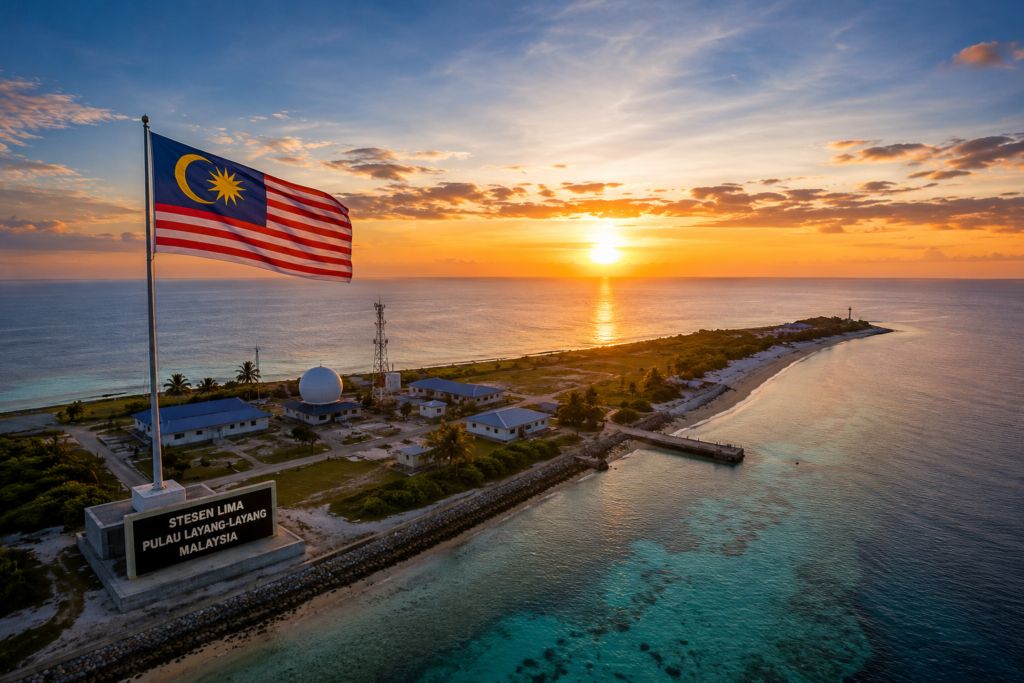
Strategic Interest in South China Sea
They illustrate a simple reality: every nation involved in the South China Sea is actively advancing and defending its own interests.
There is nothing unusual about that.
Every sovereign nation has both the right and the responsibility to articulate a narrative that supports its strategic objectives, protects its sovereignty and safeguards its future.
The more important question is whether Malaysia has done enough to define its own.
Defending More Than Territory
Every country involved in the South China Sea dispute has developed a narrative to support its national position.
China speaks of historical rights.
The Philippines relies heavily on the 2016 arbitral award.
Vietnam advances its own historical and legal arguments.
The United States frames its involvement in terms of freedom of navigation and the rules-based international order.
Each of these narratives reflects the national interests of those advancing them.
Malaysia should expect nothing less.
But neither should Malaysia simply adopt the narratives of others.
Our position must be based on our own history, our own legal rights and our own strategic priorities.
The South China Sea is not merely an international legal issue for Malaysia.
It is where our sovereignty, maritime resources, national security and economic future converge.
Protecting those interests requires clarity of purpose and confidence in articulating Malaysia’s own perspective.
The Forgotten Legacy Of The “Malayan Sea”
One aspect of that perspective has received surprisingly little attention.
Long before the term “South China Sea” became widely used, historical records referred to parts of these waters as the “Malayan Sea” or “Sea of Malayu”.
Arab traders writing more than a thousand years ago referred to the maritime route through the Malay world as the Sea of Malayu. Portuguese cartographer Manuel Godinho de Erédia recorded similar references in the early seventeenth century. British navigational charts and geographical publications of the nineteenth century also used the term “Malayan Sea” in describing these waters.
These historical references are not advanced as proof of modern sovereignty.
International boundaries and maritime rights are determined by contemporary international law, not by historical place names.
Nevertheless, history matters.
It reminds Malaysians that our connection with these waters did not begin with the 2016 arbitral award, nor with the emergence of present-day geopolitical rivalries.
For centuries, these seas formed part of the maritime world that connected the Malay Peninsula, Borneo and the wider Nusantara region through trade, culture and civilisation.
That heritage deserves to be remembered whenever Malaysia’s interests in the South China Sea are discussed.
A Malaysian Narrative For A Malaysian Future
Malaysia’s strength has always been its ability to pursue a balanced and independent foreign policy.
We have consistently supported peaceful dialogue, adherence to international law and ASEAN-centred solutions to regional disputes.
At the same time, Malaysia has never hesitated to defend its sovereignty whenever necessary.
The recent decision to enhance surveillance at Pulau Layang-Layang reflects that approach.
It is not an act of provocation.
It is an exercise of responsibility by a sovereign nation protecting its legitimate interests.
Likewise, diplomatic protests should not be viewed as confrontational.
They are a normal instrument of international relations, serving to place on record a state’s position whenever its rights or interests are challenged. By lodging such protests, Malaysia demonstrates that it will neither remain silent nor allow competing claims to go unanswered.
This balanced approach should also define Malaysia’s public narrative on the South China Sea.
Rather than framing the issue as a contest between major powers or rival claimant states, Malaysia should consistently emphasise four principles: sovereignty, peaceful dispute resolution, respect for international law and the protection of our national interests.
These principles have guided Malaysia for decades.
They should continue to do so.
Speaking With Our Own Voice
The debate over the South China Sea should never become a choice between competing foreign narratives.
Malaysia has its own history.
Malaysia has its own legal position.
Malaysia has its own strategic interests.
Most importantly, Malaysia has its own voice.
The Philippines is entitled to pursue Philippine interests.
China is entitled to pursue Chinese interests.
The United States is entitled to pursue American interests.
Vietnam is entitled to pursue Vietnamese interests.
Malaysia must pursue Malaysian interests.
That is neither confrontational nor controversial.
It is the very essence of sovereignty.
The installation of a radar system on Pulau Layang-Layang demonstrates that Malaysia understands the importance of defending its physical presence in the South China Sea.
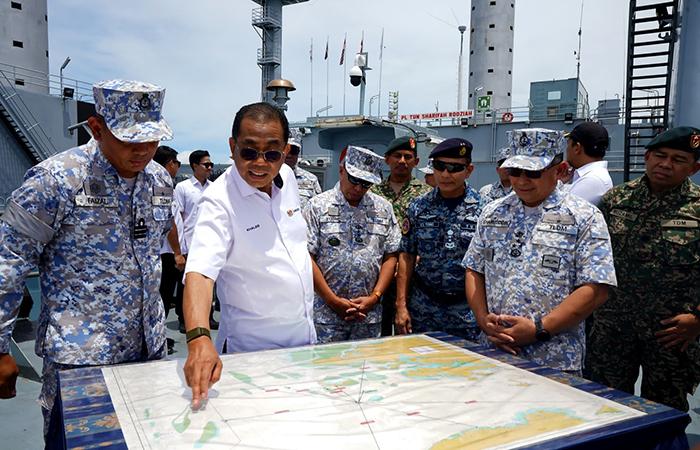
The next step is equally important.
Malaysia must continue to articulate and defend its own legal, historical and strategic narrative with the same confidence.
Only then will Malaysia truly speak with its own voice in one of the world’s most consequential maritime regions. – NMH

Datin Hasnah is the co-founder and CEO of New Malaysia Herald based in Kuala Lumpur, Malaysia.
With an extensive background in mass communication and journalism, she works on building up New Malaysia Herald and it’s partner sites. A tireless and passionate evangalist, she champions autism studies and support groups.
Datin Hasnah is also the Editor in Chief of New Malaysia Herald.
Facebook Comments