Liquidator Angela Barkhouse told the High Court during the 1MDB Civil Trial that her team traced allegedly misappropriated 1MDB funds through 29 offshore entities, while confirming that her findings were based on a retrospective reconciliation and that she could not attest to the final overall recovery figure.
Liquidator Appointed Over 29 Offshore Entities, the 1MDB Civil Trial was told
KUALA LUMPUR, 10 August 2026 – The 1MDB Civil Trial turned to the recovery and tracing of allegedly misappropriated funds today, with offshore asset recovery specialist Angela Barkhouse telling the High Court that she had been appointed liquidator for 29 offshore entities linked to the transactions under investigation.
Barkhouse, managing director of Kroll (Cayman) Ltd, is the third witness in the US$5.64 billion civil suit brought by 1Malaysia Development Berhad (1MDB) and its subsidiaries against former prime minister Datuk Seri Najib Razak and several other defendants.
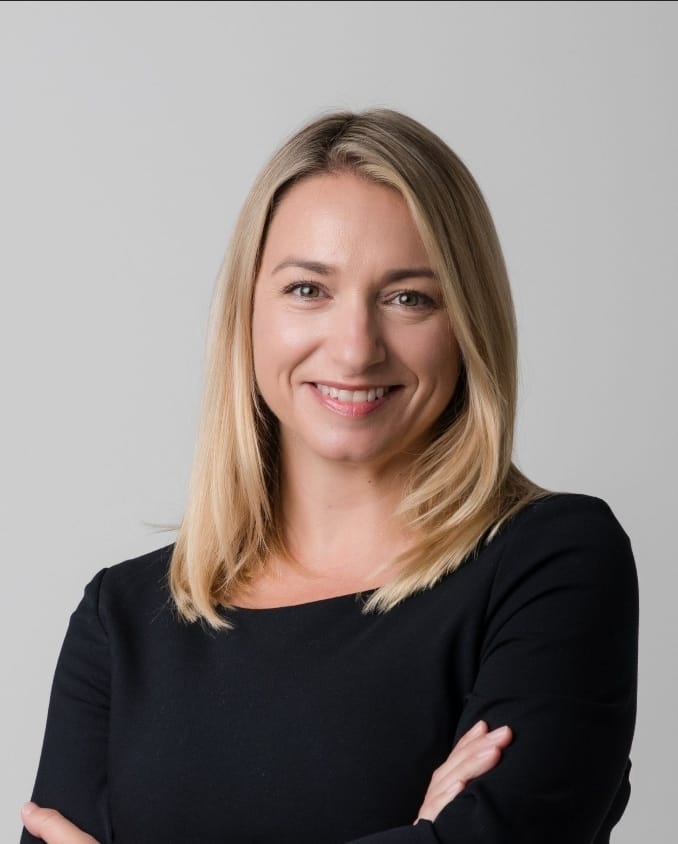
She said the various appointments were made between July 2021 and May 2025.
Among the entities identified were Lucetta Investments Ltd, PetroSaudi Oil Services Ltd, TKIL Global Investments Ltd, PetroSaudi International, Aabar International Investments PJS Ltd, Alsen Chance Holdings Ltd, Blackrock Commodities (Global) Ltd and Platinum Global Luxury Services Ltd.
Barkhouse told the court that her analysis enabled her team to trace funds allegedly misappropriated from 1MDB through a complex network of offshore entities associated with parties allegedly involved in the fraud.
She said her investigations remained ongoing, with further information continuing to be obtained and analysed on behalf of the liquidated estates and claims pursued against parties alleged to have facilitated the movement or laundering of the funds.
Findings Based on Retrospective Reconciliation
An important aspect of Barkhouse’s testimony, however, was the nature of her investigation.
Under questioning, she confirmed that her findings were based on a retrospective reconciliation.
The investigation itself was conducted in 2024 and completed in 2025 – several years after the transactions in question and long after earlier investigations into 1MDB had begun.
Barkhouse explained that the figures and information used in the reconciliation had been obtained from staff within her firm, after which the information was brought together and totalled.
The distinction is important because her evidence was not based on firsthand observation of the original transactions. Rather, it involved reconstructing and reconciling information available to her team at a later stage.
Barkhouse also acknowledged that she did not have the final overall figure for the amount recovered.
Although she was involved in recovery work, she could not attest to a final consolidated recovery figure.
That prompted questions over the scope of the reconciliation – including what information was available to the team at the time and whether the exercise was intended to establish the full amount ultimately recovered or to address a more specific aspect of the liquidated estates.
The issue may become significant as the defence continues to examine the relationship between the amounts allegedly misappropriated, funds traced and sums subsequently recovered.
Shafee Puts Jho Low at the Centre of Questioning
During cross-examination, lead defence counsel Tan Sri Muhammad Shafee Abdullah focused on the role of fugitive financier Low Taek Jho, better known as Jho Low.
Shafee asked Barkhouse whether she had encountered Low’s name during her investigation.
She confirmed that she had.
Shafee then put to her that Jho Low lay at the centre of the controversy surrounding 1MDB and the alleged conspiracy to destroy the sovereign wealth fund.
Barkhouse responded: “Among others, yes.”
When Shafee asked whether she agreed that Jho Low was the main person behind the alleged conspiracy, however, Barkhouse said she was uncertain.
She explained that her focus was on those who had received the allegedly misappropriated funds.
That exchange is significant because it illustrates the distinction between Barkhouse’s role as a liquidator and the wider question of who ultimately bears responsibility for the alleged wrongdoing.
Her mandate, as described in court, is principally concerned with identifying and pursuing assets and claims connected to the liquidated estates. Determining the overall hierarchy of responsibility for the alleged 1MDB fraud is a broader question for the court.
Tracing Funds Versus Establishing Responsibility
The distinction between tracing funds and establishing responsibility could become an important feature of the next stage of the trial.
Barkhouse’s evidence provides the plaintiffs with a detailed picture of the complex offshore network through which funds were allegedly moved.
But the existence of an offshore entity, a transfer or a recipient does not necessarily, on its own, establish who authorised a transaction, who knew about it or who was ultimately responsible for the alleged misappropriation.
That distinction is likely to be tested further during cross-examination.
It also follows the broader pattern established during the first week of the trial, when defence counsel questioned former investigator Richard Templeman about the methodology and documentary basis of his investigation.
The defence has repeatedly sought to distinguish between evidence showing where money went and evidence establishing who was responsible for sending it there.
The Recovery Question Remains
Barkhouse’s inability to confirm the final overall recovery figure also leaves open an issue that has already featured prominently in the defence’s narrative.
At a press conference last week, Shafee said approximately RM31 billion had been recovered by 1MDB and its subsidiaries – a figure exceeding the approximately RM24 billion being claimed in the civil action.
That figure was not put to Barkhouse as part of this morning’s evidence, and she did not attest to it.
Nevertheless, her testimony that she had been involved in recovery work but did not have the final consolidated recovery figure raises a question that may warrant further examination – how the various recovery exercises, liquidated estates and sums recovered fit together in determining the amount ultimately sought from the defendants.
That is particularly relevant in a civil action where the plaintiffs are seeking to recover billions of ringgit.
A More Complex Picture of the Evidence
Barkhouse’s testimony therefore adds another layer to the 1MDB Civil Trial.
On one level, the court has heard evidence of an extensive tracing exercise involving 29 offshore entities and a network spanning multiple jurisdictions.
On another, the evidence highlights the complexity of reconstructing transactions years after they occurred, with the liquidator relying on information compiled by her team and reconciling figures retrospectively.
Her evidence also stops short of identifying Jho Low as the sole person responsible for the alleged conspiracy, with Barkhouse telling the court that her focus was on recipients of allegedly misappropriated funds.
As the trial continues, the court will have to consider not only the tracing of the funds but also what the evidence establishes about the roles, knowledge and responsibilities of the various defendants.
The hearing continues tomorrow. – NMH
Datin Hasnah is the co-founder and CEO of New Malaysia Herald based in Kuala Lumpur, Malaysia.
With an extensive background in mass communication and journalism, she works on building up New Malaysia Herald and it’s partner sites. A tireless and passionate evangalist, she champions autism studies and support groups.
Datin Hasnah is also the Editor in Chief of New Malaysia Herald.
Facebook Comments
Facebook Comments